



Compressors are critical components in various industrial processes, including natural gas processing, petrochemical production, and refrigeration systems. To ensure their optimal performance and longevity, it is essential to construct robust foundations that can support their weight, mitigate vibrations, and handle operational stresses. This article explores the key considerations, steps, and best practices involved in the construction of compressor foundations.
Importance of Compressor Foundations
- Stability and Support: Proper foundations provide the necessary support to bear the weight of compressors and associated equipment, preventing shifting or settling that could compromise operations.
- Vibration Control: Foundations help in absorbing and mitigating vibrations generated by the compressor, which can otherwise lead to mechanical failures or reduced efficiency.
- Structural Integrity: Well-constructed foundations ensure the structural integrity of both the compressor and the surrounding infrastructure, preventing damage due to dynamic loads and operational stresses.
- Longevity: A strong foundation extends the lifespan of compressors by minimizing wear and tear caused by vibrations and operational forces.
Pre-Construction Planning
- Site Survey and Soil Analysis
– Geotechnical Investigation: Conduct a thorough geotechnical investigation to assess soil properties, bearing capacity, and potential settlement issues. This analysis helps in designing a foundation that can adequately support the compressor.
– Site Selection: Choose a site that is level and has good drainage to prevent water accumulation around the foundation. - Design Considerations
– Load Analysis: Calculate the static and dynamic loads imposed by the compressor, including its weight, operational forces, and potential impact loads.
– Vibration Isolation: Design the foundation to include vibration isolation measures, such as using vibration dampers or isolators, to minimize the transmission of vibrations to the surrounding structures.
– Thermal Expansion: Consider the effects of thermal expansion and contraction, especially if the compressor operates at varying temperatures.
Construction Process
- Excavation and Site Preparation
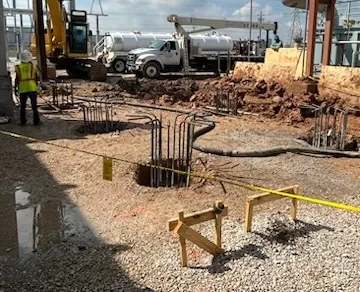
– Clearing and Grubbing: Remove vegetation, debris, and topsoil from the construction area to create a clean and stable work surface.
– Excavation: Excavate the site to the required depth based on the foundation design, ensuring proper slope and alignment. - Formwork and Reinforcement
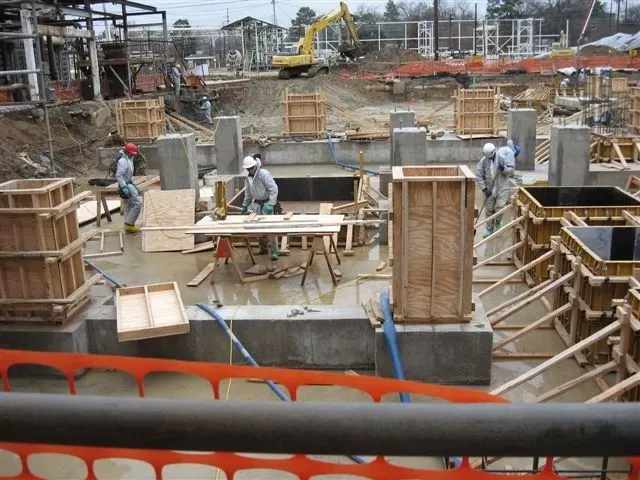
– Formwork Installation: Construct formwork to shape the foundation. Use sturdy materials like wood or steel to create a mold that can withstand the pressure of the concrete.
– Rebar Placement: Place reinforcing bars (rebar) within the formwork according to the design specifications. Rebar provides additional strength and helps distribute loads evenly across the foundation. - Concrete Pouring
– Mixing and Quality Control: Use high-quality concrete with the specified mix design. Ensure proper mixing to achieve uniform consistency and strength.
– Pouring Concrete: Pour the concrete into the formwork in layers, using vibrators to eliminate air pockets and ensure proper compaction. Maintain a continuous pour to avoid cold joints and ensure uniform curing. - Curing and Finishing
– Curing Process: Allow the concrete to cure properly by keeping it moist and protected from extreme temperatures. Curing is critical for achieving the desired strength and durability.
– Surface Finishing: Finish the surface of the foundation to the required smoothness and levelness. This step ensures proper seating and alignment of the compressor. - Installation of Vibration Isolation
– Isolation Pads or Mounts: Install vibration isolation pads or mounts between the compressor and the foundation. These elements help in reducing the transmission of vibrations and operational noise.
Post-Construction Considerations
- Inspection and Testing
– Visual Inspection: Conduct a thorough visual inspection of the foundation for any signs of cracks, uneven settling, or defects.
– Load Testing: Perform load testing to verify the foundation’s ability to bear the static and dynamic loads imposed by the compressor. - Regular Maintenance
– Periodic Inspections: Schedule regular inspections to monitor the condition of the foundation and identify any issues that may require repair.
– Maintenance of Isolation Elements: Check and maintain vibration isolation elements to ensure their continued effectiveness in mitigating vibrations.
Best Practices for Compressor Foundations
- Adherence to Standards: Follow industry standards and guidelines for the design and construction of compressor foundations to ensure safety and reliability.
- Expert Consultation: Engage experienced structural engineers and geotechnical experts in the design and construction process to address site-specific challenges and optimize foundation performance.
- Quality Materials: Use high-quality construction materials, including concrete, rebar, and isolation pads, to enhance the durability and effectiveness of the foundation.
- Documentation: Maintain detailed records of the design, construction, and testing processes for future reference and maintenance planning.
Conclusion
The construction of compressor foundations is a critical aspect of ensuring the stability, performance, and longevity of industrial compressors. By conducting thorough site surveys, designing robust foundations, and adhering to best construction practices, operators can mitigate vibrations, prevent structural issues, and maintain efficient operations. A well-constructed foundation is an investment in the reliability and durability of both the compressor and the overall industrial infrastructure.