



Fiberglass piping has emerged as a popular choice in various industries due to its unique properties and advantages. This article explores the fabrication and installation processes of fiberglass piping, highlights the benefits of its use, and emphasizes the importance of involving qualified personnel, especially for specific types like red thread fiberglass piping.
The Fabrication of Fiberglass Piping
Fiberglass piping, also known as Fiberglass Reinforced Plastic (FRP) piping, is manufactured using a combination of glass fibers and a thermosetting resin. The glass fibers provide strength and stiffness, while the resin acts as a binder, offering chemical resistance and durability. The fabrication process involves several steps:
- Selection of Raw Materials: The choice of resin and glass fibers depends on the intended application. Common resins include epoxy, vinyl ester, and polyester, each offering different levels of chemical resistance and mechanical properties.
- Winding Process: The most common method for fabricating fiberglass pipes is the filament winding process. Continuous glass filaments are impregnated with resin and wound around a rotating mandrel in a specific pattern. This pattern, often a helical or hoop winding, determines the pipe’s strength and pressure-bearing capacity.
- Curing: After winding, the pipe undergoes a curing process, where it is heated to harden the resin. This step is crucial for achieving the desired mechanical properties and chemical resistance.
- Post-Processing: Once cured, the pipe is removed from the mandrel and undergoes finishing processes, such as trimming, inspection, and testing. Quality control is critical at this stage to ensure the pipe meets industry standards and specifications.
The Installation of Fiberglass Piping
The installation of fiberglass piping requires specialized skills and knowledge due to the material’s unique properties. Unlike metal pipes, fiberglass pipes are lightweight, non-corrosive, and have a high strength-to-weight ratio. However, they also have specific handling and installation requirements:
- Handling and Transportation: Fiberglass pipes are lightweight but can be brittle if not handled correctly. Proper care must be taken during transportation and storage to prevent damage.
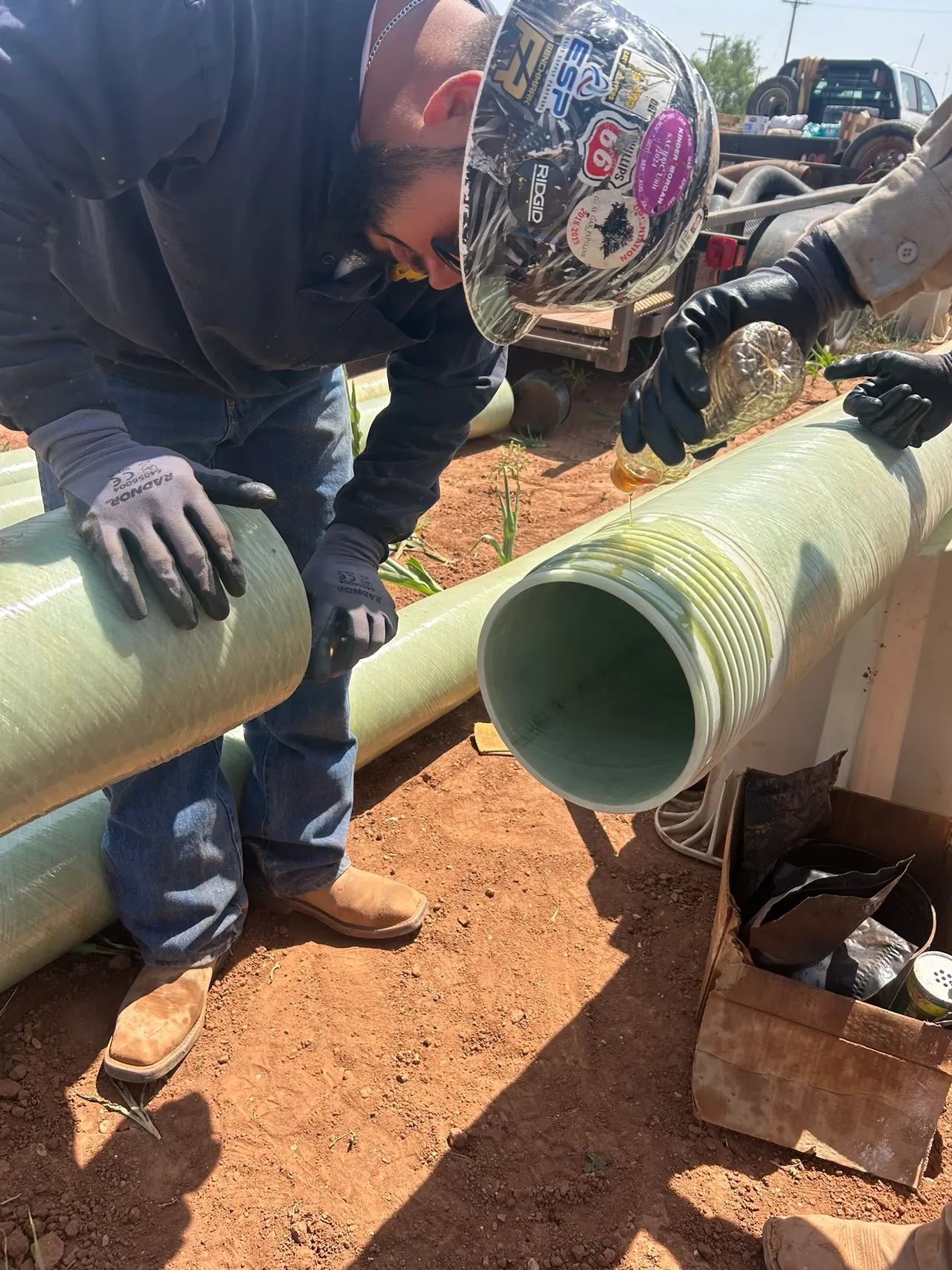
- Joint Assembly: The assembly of fiberglass piping systems often involves adhesive bonding, mechanical joints, or a combination of both. For example, red thread fiberglass piping systems use threaded connections with a special adhesive to ensure a leak-free seal. It is crucial to follow the manufacturer’s instructions and use the recommended adhesives and tools.
- Support and Anchoring: Unlike metal pipes, fiberglass pipes require more frequent support due to their flexibility and potential for thermal expansion. Properly designed supports and anchors are essential to prevent sagging, movement, and stress concentrations.
- Testing and Inspection: After installation, the system must be tested for leaks and inspected for compliance with design specifications. Hydrostatic testing, pneumatic testing, and visual inspections are common methods used to verify the integrity of the installation.
Benefits of Fiberglass Piping
Fiberglass piping offers several advantages over traditional materials like steel, copper, and PVC, making it an attractive choice for various applications:
- Corrosion Resistance: Fiberglass pipes are highly resistant to corrosion from chemicals, moisture, and other environmental factors. This makes them ideal for transporting corrosive fluids, seawater, and other aggressive substances.
- Lightweight: Compared to metal pipes, fiberglass pipes are much lighter, reducing transportation and installation costs. This also makes them easier to handle and install, especially in remote or challenging locations.
- High Strength-to-Weight Ratio: Despite being lightweight, fiberglass pipes offer excellent mechanical strength, allowing them to withstand high pressure and mechanical loads.
- Thermal Insulation: Fiberglass has good thermal insulation properties, reducing heat loss and the need for additional insulation in certain applications.
- Longevity and Low Maintenance: Fiberglass piping systems have a long service life and require minimal maintenance. They do not rust or corrode, which significantly reduces maintenance costs over time.
The Importance of Qualified Personnel
The successful fabrication and installation of fiberglass piping require specialized skills and knowledge. Due to the unique properties of fiberglass, improper handling, installation, or assembly can lead to system failures, leaks, and costly repairs. Therefore, it is essential to involve qualified personnel who have been trained in the specific techniques and procedures associated with fiberglass piping.
Red Thread Fiberglass Piping is a particular type of fiberglass piping known for its threaded connections. These systems require precise application of adhesives and careful assembly to ensure a secure and leak-free installation. Only qualified technicians familiar with the specific requirements of red thread piping should undertake these installations.
Conclusion
Fiberglass piping offers numerous benefits, including corrosion resistance, lightweight construction, and high strength-to-weight ratio, making it a valuable choice in various industries. However, the unique characteristics of fiberglass require specialized knowledge and skills for proper fabrication and installation. Involving qualified personnel, especially for specialized systems like red thread fiberglass piping, is crucial to ensure the longevity and reliability of the piping system. As industries continue to seek durable, low-maintenance piping solutions, fiberglass piping stands out as a versatile and efficient option.